After the dust settles on this year’s Cannes Film Festival, Watershed’s Cinema Curator Mark Cosgrove reports on how a new focus on international cinema will shape up the coming seasons, and his top contenders coming out of this year’s line-up…
One of the talking points at this year’s Cannes was the lack of “star” power. Of course, what this translates to is fewer Hollywood films & talent. There were plenty of stars around, from Javier Bardem, fantastic in The Beloved playing in competition, to Sandra Huller, another superb performance in Fatherland also playing in competition, to Ken Loach, introducing a 4K restoration of Land and Freedom which played to great acclaim in Cannes in 1995. The lack of distraction that Hollywood brings meant there was more focus on films from Europe and across the world as well as the glorious restoration of Ken Russell’s controversial 1971 The Devils in all its profane glory.
Here are some of the films I watched with thoughts on their potential to connect with UK audiences:
Nagi Notes
Directed by: Koji Fukada (Japan)
Fukada’s taut cuckoo-in-nest thriller Harmonium won Un Certain Regard jury prize in 2016. Ever since then I have followed his films with eager anticipation to which they have never lived up to. Nagi Notes is getting there! It’s a very different tone and mood to Harmonium, the film is about two women – friends and former sisters-on-law – dealing with an emotional crossroads in their personal lives. The gentle tone and setting in bucolic rural Nagi, allows the film’s themes of female friendship and identity to emerge in a satisfyingly unhurried way. I’m sure it will find its way to a UK festival, possibly FLARE, whether further remains to be seen.
Fatherland
Directed by: Pawel Pawlikowski (Poland)
A highlight of the festival (and not only for its running time of 82 minutes!) It imagines the road trip that esteemed German writer Thomas Mann and his daughter Erika took through the physical and psychic trauma of a post war divided Germany for Mann Snr. to collect awards from both the American controlled West and Russian East. Shot in a similar format – academy ratio / black & white – to Pawlikowski’s Cold War and Ida, Fatherland distils its political and cultural critique into an absorbing emotional father / daughter relationship. Following acclaim at Berlinale for her performance in Rose, Hüller’s profile is stratospheric. Mubi are releasing Fatherland in the UK. Expect strong box-office in indie sites.
All of a Sudden
Directed by: Ryusuke Hamaguchi (Japan)
From the brevity of Fatherland to the luxuriant 3 hour plus of All of A Sudden. If you have seen his award-winning Drive My Car, you will know that Ryusuke Hamaguchi knows how to seduce audiences into the lives of his characters. Set in France, they are an impassioned nursing home director (played by Virginie Efira) and terminally ill Japanese theatre director (Tao Okamoto). The genius of Hamaguchi is how he makes you care for the characters (Both Emir and Okamoto won best actress), their situations and their challenges. I described it as 3 hours of mindful Marxism – exactly what we need these days! Curzon are releasing in the UK and given Drive My Car performed impressively and played for over 26 weeks expectations are promising for All of A Sudden.
The Beloved
Directed by: Rodrigo Sorogoyen (Spain)
Two exceptional performances anchor this muscular emotional drama. Javier Bardem is a force of nature as acclaimed film director Esteban Martinez making his latest film and casting his estranged daughter Emilia (Victoria Lunga). Thematically it is a mirror image of last year’s Sentimental Value, but stylistically it replaces Nordic ennui with Spanish passion. And whilst it is also very much in the film-about-filmmaking genre, it gives that a refresh with one scene in particular a standout. Great reviews and the central performances will help secure this film a UK distributor. Whilst Sorogoyen’s previous film The Beasts played well at indie cinemas, The Beloved has potential to perform much better.
Fjord
Directed by: Christian Mungiu (Romania/Norway)
The Palme d’Or winner and bête-noir of Guardian critic Peter Bradshaw! It’s certainly not as intensely unsettling as the director’s previous Palme d’Or winner 4 Months, 3 Weeks and 2 Days, but Mungiu’s command of style and storytelling is exceptional, and visually the film is much more accessible, shot in cinemascope in a small remote Norwegian fjord town, than the austere look and feel of 4 Months, 3 Weeks and 2 Days. The story of a professional Romanian young family (husband, aeronautical engineer Mihai – an unrecognisable Sebastian Stan – and mother, a nurse and Norwegian by birth, played by Renate Reinsve) with conservative religious observances, especially for their children, bumping up against Norway’s strict child protection makes for a tense ethical culture clash. It should make for a strong discussion film for engaged audiences and at a simple level, a well told court room drama. Will be released by Picturehouse.
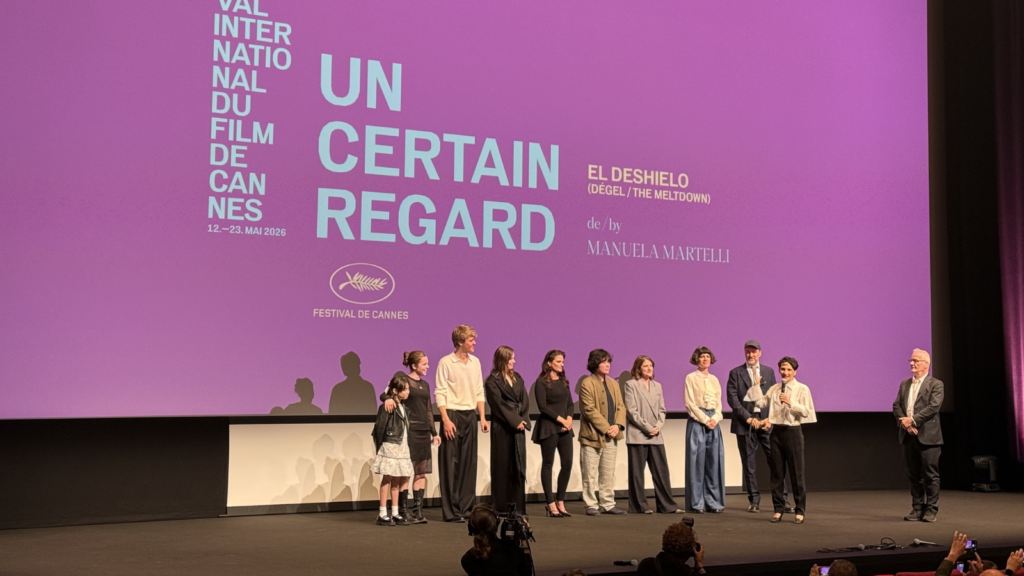
The Meltdown
Directed by: Manuela Martelli (Chile)
Set in 1992, Chilean director Manuela Martello’s second feature The Meltdown is an elegantly enigmatic child’s eye view of the coming and goings in her grandparents’ ski resort hotel in the Andes. Martello’s problem is that the bar for me was set so high by her debut feature, the political thriller Chile 1976, that The Meltdown was in a way never going to reach it. There is however much in the film to admire and digest. Perfect for Latino/Spanish language programming. Yet to find UK distribution.
Minotaur
Directed by Andrey Zvyagintsev (France/Latvia/Germany)
Another high point for me. All of tense thriller, domestic drama and seething critique of corruption in Russia against the backdrop of the invasion of Ukraine, Minotaur is impressive cinema framed beautifully in stunning cinemascope. Zvyagintsev found in Claude Chabrol’s coldly methodical 1969 The Unfaithful Wife the perfect morality tale with which to train his cinematic sights on his home country’s faults. It should have taken top prize in my eyes and should play very well with audiences. Released by Mubi.
La Bola Negra
Directed by Javier Calvo & Javier Ambrossi (Spain)
The cinematic ambition of Los Javi’s La Bola Negra is nothing if not impressive: weaving three interconnected stories of three men in three different eras. The film is a cumulative uncovering of repressed and oppressed gay desire. It’s done with phenomenal filmmaking energy, sometimes brash but always exuberantly confident. It holds lots of ingredients to appeal to audiences: the fascination with poet Ferderico Garcia Lorca, (and Penelope Cruz) and renewed interest in the generational trauma of Spain under Franco. Netflix seem to have acquired rights but committing to theatrical release.
The Man I Love
Directed by: Ira Sachs (USA)
I have mixed emotions about Ira Sachs films but The Man I Love really grew on me. As is his style it is a quiet observation of gay relationships, here a singer/performer Jimmy George (Rami Malek) is rehearsing for his first performance having recovered from an illness. The context of 1980s New York and the rising homophobia of Reagan’s America in response to HIV/AIDs is very subtly at the fringes of the film which makes the emotional impact all the more powerful. Malek’s performance divided opinion but for me he convinced as a drama queen realising his fate. Does not yet have a UK distributor but with some tlc The Man I Love could connect well with audiences.
Elephants In The Fog
Directed by Abinash Bikram Shah (Nepal)
Full disclosure: I went to see this film because of its title, and I was so glad I did. The first Nepalese film to play in Cannes, Elephants In The Fog is both an insight into Nepal’s Kinnar culture and a sensitive rewarding drama. The Kinnar are transgender, non-binary and intersex people that are popularly identified as a harbinger of good fortune. The film follows the interweaving dramas of four transgender women who survive through ritual performances and by joining the village’s nightly elephant patrols.
The film went onto win the Jury prize for Un Certain Regard strand which should help with potential UK distribution.
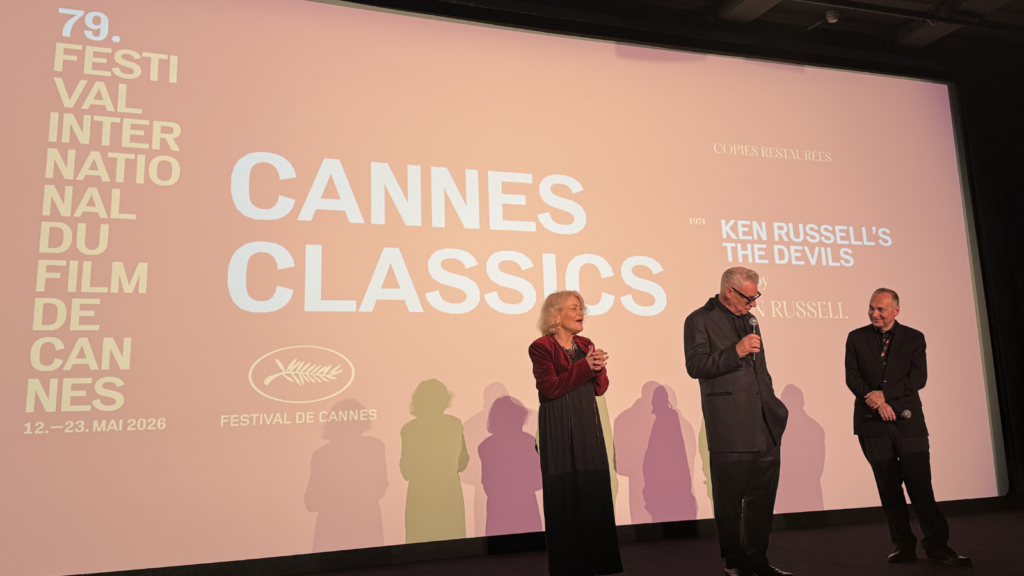
The Devils
Directed by Ken Russell (UK)
Much talked about – especially by critic/broadcaster Mark Kermode who has been advocating for the film for years – finally an opportunity to see The Devils as Ken Russell conceived it in 1971. Forget all the tabloid chatter, this restoration reveals a bold, exhilarating, visually stunning film which explores the corrupt marriage of church and state. The restoration will do much to reaffirm Russell’s status in the filmmaking firmament. Warners new label Clockwork will be releasing with the BFI in October – expect an LFF gala.
Visitation
Directed by: Volker Schlöndorff (Germany)
It always surprises me that director Volker Schlöndorff is never up there with Wenders or Herzog in the pantheon of celebrated German filmmakers. With films like The Lost Honor of Katharina Blum (1975), The Tin Drum (1979) and The Handmaid’s Tale (1990) he deserves to be wider acknowledged. The sprightly 87-year-old introduced his latest film which is an elegant yet powerful adaptation of Jenny Erpenbeck’s 2018 novel and sits as a more accessible companion piece to The Zone of Interest and The Sound of Falling. Yet to find UK distribution.
The Diary of a Chambermaid
Directed by: Radu Jude (France/Romania)
Radu Jude reigns in the extremes of his vivid surreal imagination – and lengthy running times – in this adaptation of Octave Mirbeau celebrated French novel The Diary of a Chambermaid. Previously filmed by Jean Renoir and Luis Buñuel, Jude brings it up to date as an often-hilarious biting satire on European culture clash with the maid being a Romanian to her employers’ bourgeois French. Yet to find UK distribution.
Mark Cosgrove
Cinema Curator – Watershed
Mark joined Watershed in 1994 and has worked in Independent Cultural Cinema Exhibition for over 20 years. He has curated seasons and touring programmes ranging from New Portuguese Cinemas to a retrospective of French filmmaker Claire Denis. He has been on juries at film festivals including Cannes and Berlin. He is also the Creative Director of Encounters International Film Festival in Bristol. In November 2010 he collected the Europa Cinemas award for Entrepreneur Cinema of the Year.